In the Spirit: The Life and Work of Lex Hixon
Early Practices
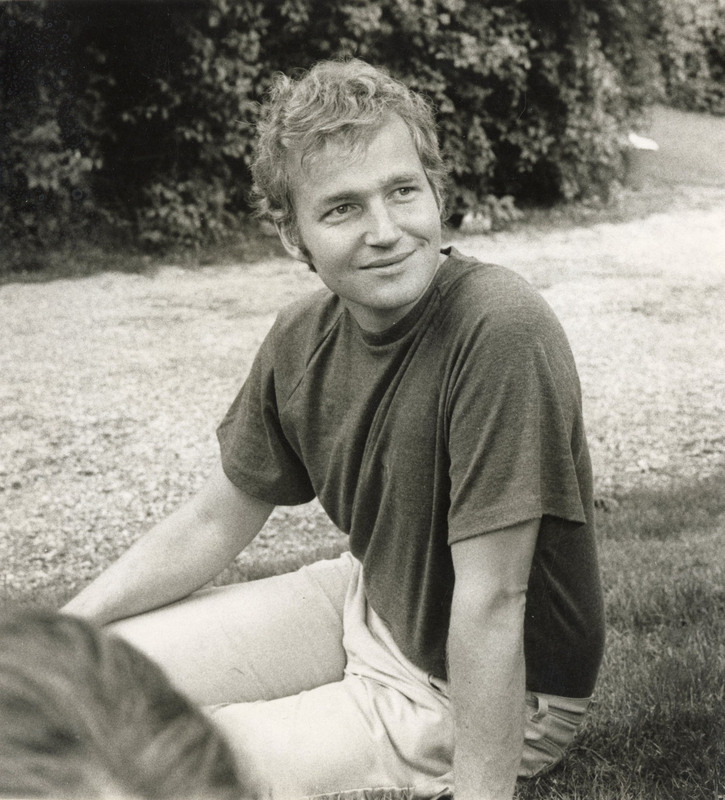
An undated black and white photograph of a young Lex Hixon, circa 1960s-1970s. Courtesy of Sheila Hixon.
Early Practices
Hixon was born in Pasadena, California in what he described as the “cultural openness and wild sacred energy” of southern California. At the age of six, during his belated baptism into the Episcopal church, he “whispered loudly, ‘What is that man talking about?’” which he credited as his first foray into the spiritual. “I was not raised conventionally or religiously. Freedom was the keynote of my parent’s philosophy,” he wrote in a 1991 autobiographical note.
In 1954, Hixon left California for Connecticut and the Hotchkiss School, an all-boys boarding and day school, where in the “monastic atmosphere” of the East Coast, Hixon cultivated two practices that would remain with him for the rest of his life: music and poetry. In his later explorations of different beliefs, poetry, music and chanting made regular appearances as parts of his devotional practice.
In a letter to Hixon's daughter, India, friend Peter Pitzele describes the first time meeting Hixon at the Hotchkiss School:
"Of course I followed the sound of out of my door and across the hall looking for their source. And I came to the door of your father’s room. In memory and in fact that room was full of light. I realize now in telling you that his window faced west, and it was late in the afternoon. I came from the dark hallway into the presence of is music and this light. I must have taken it all in a single glance: a boy seated cross-legged on the floor haloed in the light from the window behind him. In his arms he held a guitar. It was made of a pale golden wood; and it seemed alive, a thing of curves and glinting strings, and notes you could almost see were pouring out of it under his blurring fingers. He was unaware of me. His head was bowed over the strings, and the music seemed to sparkle around that head. I stood as still as you might stand in the presence of a wild deer you did not wish in any way to startle and I listened, and I looked at him, and I saw how the blond hair curled in little ringlets over his forehead, a blond like nothing I had ever seen, spun and gleaming, utterly casual in its beauty. I saw the slightly wrinkled line above his eyes furrowed by his concentration. His feet I saw were bare. And when, as it happened, he lifted up his head , sensing me, his head caught the full cast of sun through his window, and I saw he had a face so fair, so cleanly featured, so full of its own light that it seemed simply miraculous to me there could be such beauty on top of such beauty. His eyes were shining, the hair bunched I almost attic curls over a face I had seen, if at all, in museums or in the art books my father stacked his library with; a face Mediterranean and Nordic all at once, a complexion colored like peach. He looked at me and smiled, and there was more openness and trust in that face than any face you could see even in a midsummer dream of New York City. There was a hint of mischief in that smile, something faintly conspiratorial. But he continued to play. If he knew he was beautiful, and how could he not, there was no trace of arrogance. He watched me again for a moment, then, realizing that I was content to watch, he bowed his head again and fired off a set of riffling flamenco chords with his long fingernails drumming a counter-cadence on the wood. Then he stopped, put his guitar down, and said "'Hi, my name is Lex.'"
Read the entire letter from Pitzele here.
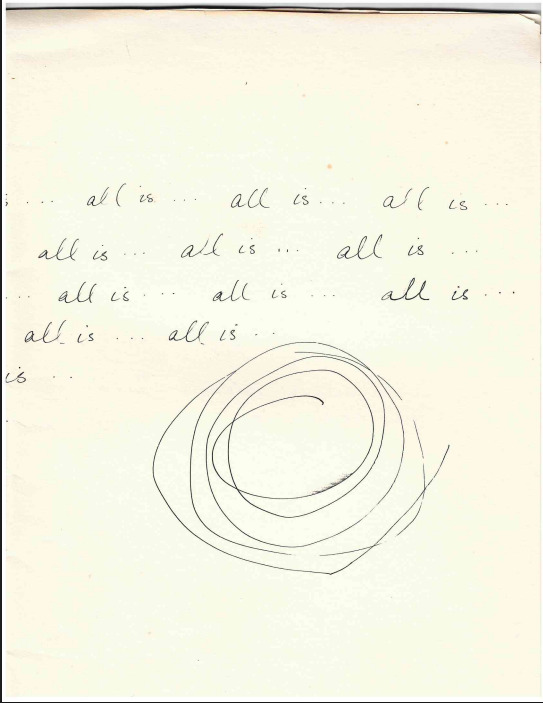
All is... self-published poetry book, 1966 Lex Hixon collection, RG 345, Box 22, Folder 6. Divinity Library Special Collections
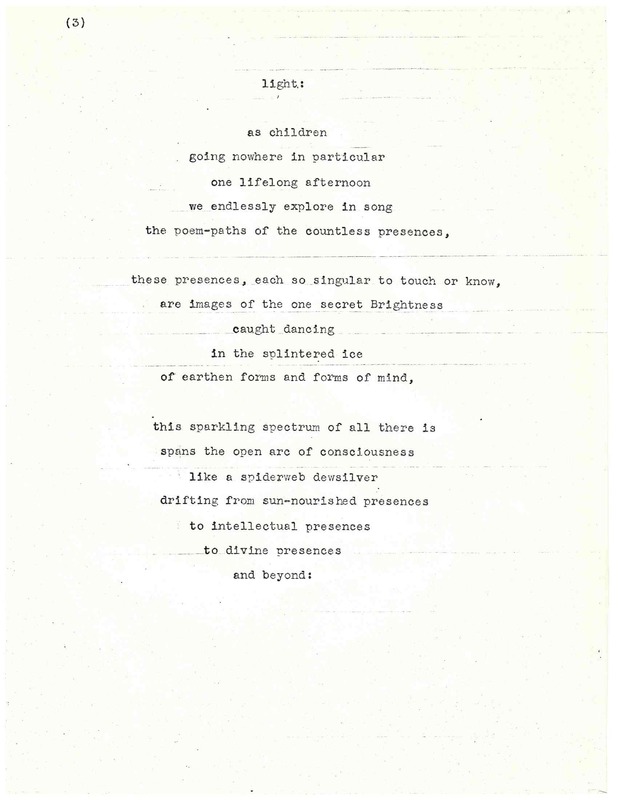
All is... self-published poetry book, page 3, 1966. Lex Hixon collection, RG 345, Box 22, Folder 6. Divinity Library Special Collections
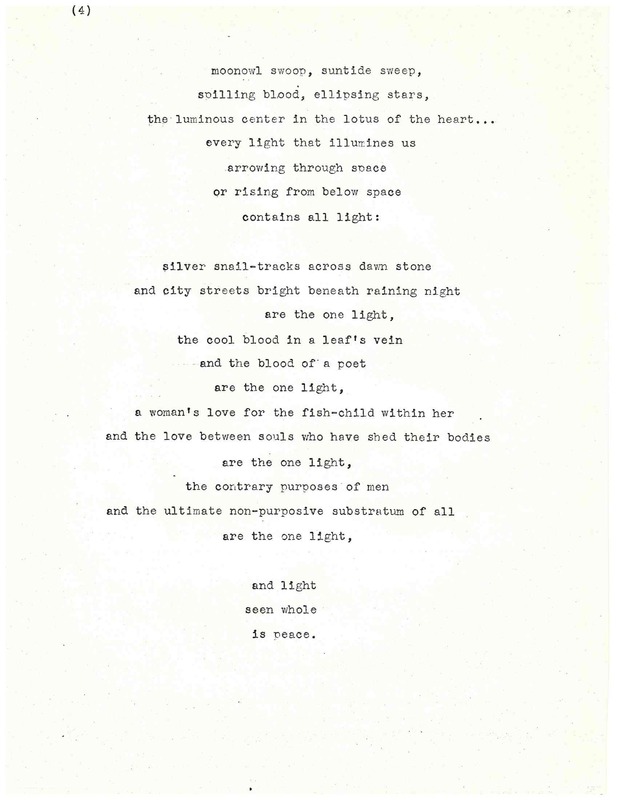
All is... self-published poetry book, page 4, 1966. Lex Hixon collection, RG 345, Box 22, Folder 6. Divinity Library Special Collections
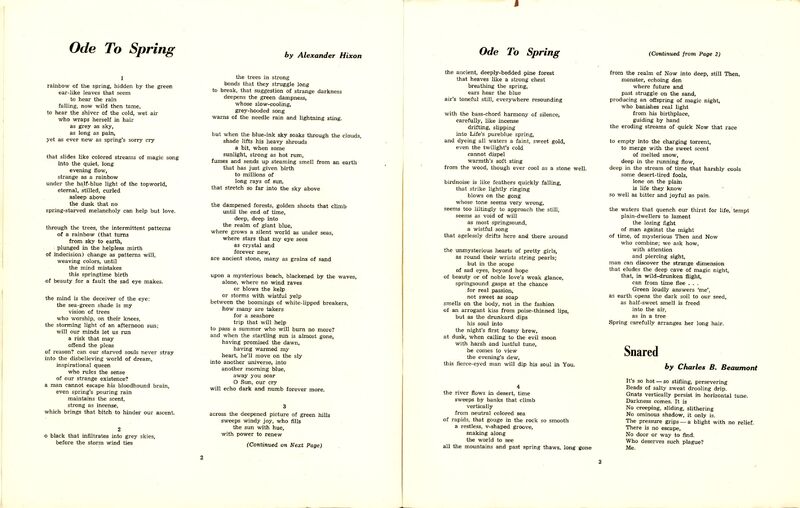
"Ode to Spring" by Lex Hixon, his award-winning poem published in the Hotchkiss Lit in the June 1959 issue. Lex Hixon papers, RG 345, Box 34, Folder 3. Divinity Library Special Collections
Hixon started writing poetry at age 14, winning several awards at Hotchkiss and publishing his own poetry books throughout his early adult life. He would continue to write devotional poetry, create meditations, and interpret others' reverential chants.
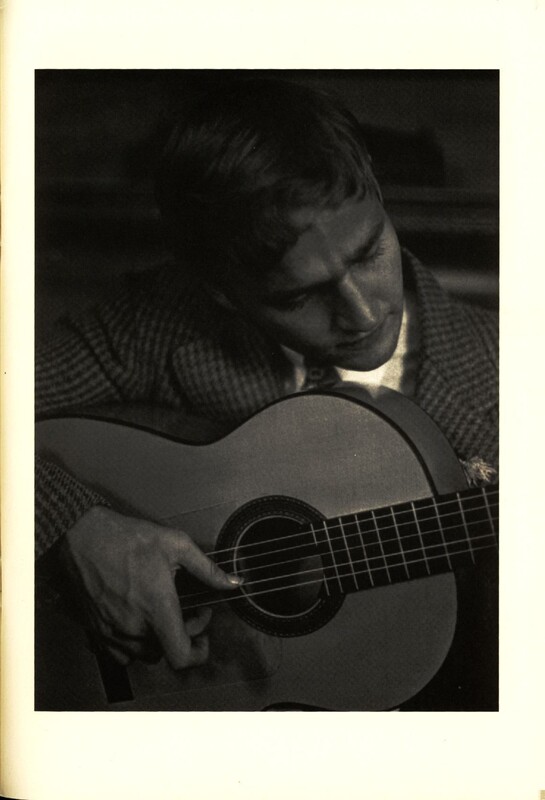
An undated photograph of Hixon playing the guitar, circa 1960s. Lex Hixon papers, RG 345, Box 34, Folder 8. Divinity Library Special Collections
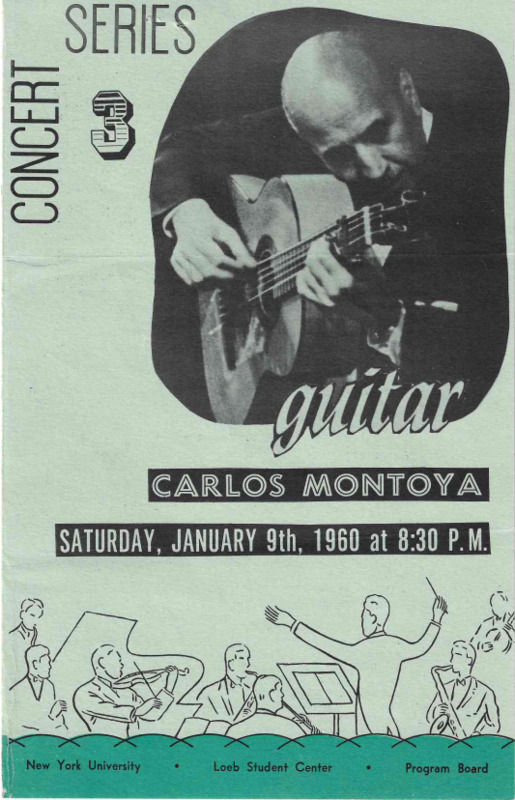
Flyer from a concert given by Carlos Monyota at NYU's Loeb Student Center in 1960. Lex Hixon papers, RG 345, Box 35, Folder 7. Divinity Library Special Collections
After graduating from Hotchkiss, Hixon enrolled at Yale University in 1959. While at Yale, Hixon began studying flamenco guitar with Carlos Montoya, a relationship that would continue for the next decade. Montoya, a flamenco master, was born in Madrid in 1903 and came to America during World War II.
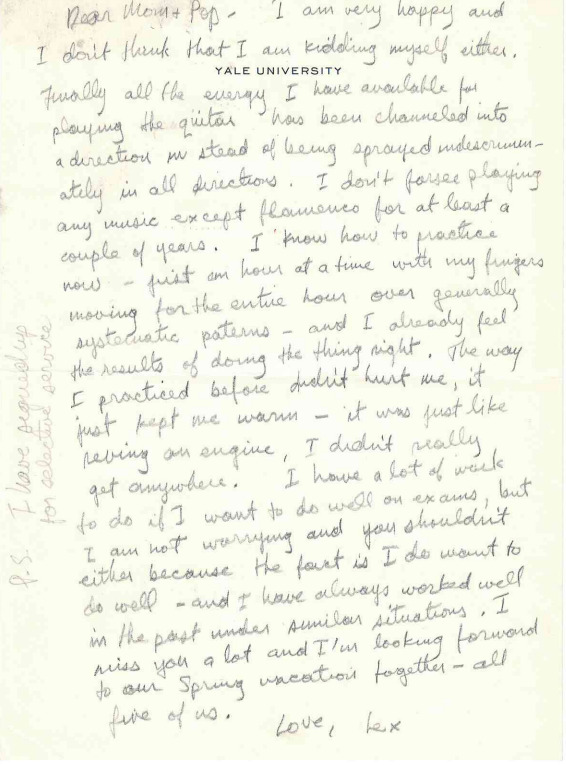
An undated letter from Lex Hixon to his parents, Adelaide and Alexander (Alec) Hixon, circa 1950s-1960s. Lex Hixon papers, RG 345, Box 35, Folder 7. Divinity Library Special Collections
Hixon studied philosophy at Yale. He was drawn especially to the works of Søren Kierkegaard. In 1991 Hixon wrote: “Kirkegaard opened wide for me the dimension of the spiritual which he clearly demonstrated to lie beyond what he called the aesthetic, and the ethical or rational.” As an undergraduate, Hixon would be exposed to two other important teachers: Vine Deloria Sr, and Ramakrishna.
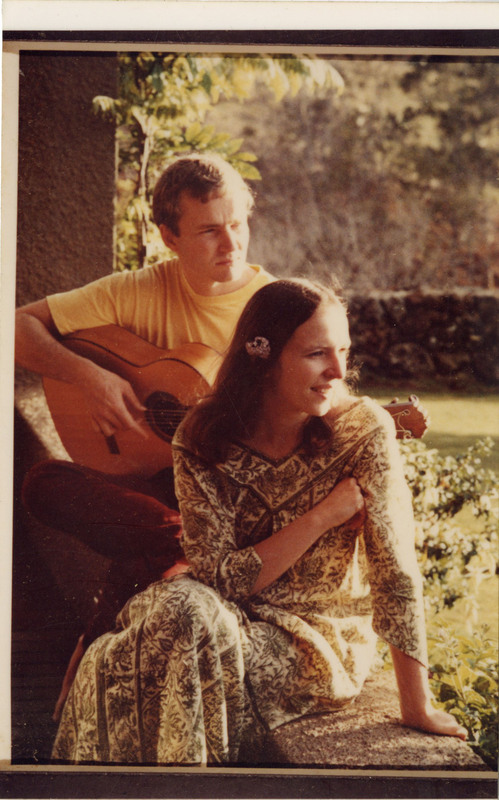
Photograph Lex and Sheila Hixon, 1966. Courtesy of Sheila Hixon