In the Spirit: The Life and Work of Lex Hixon
Sufism
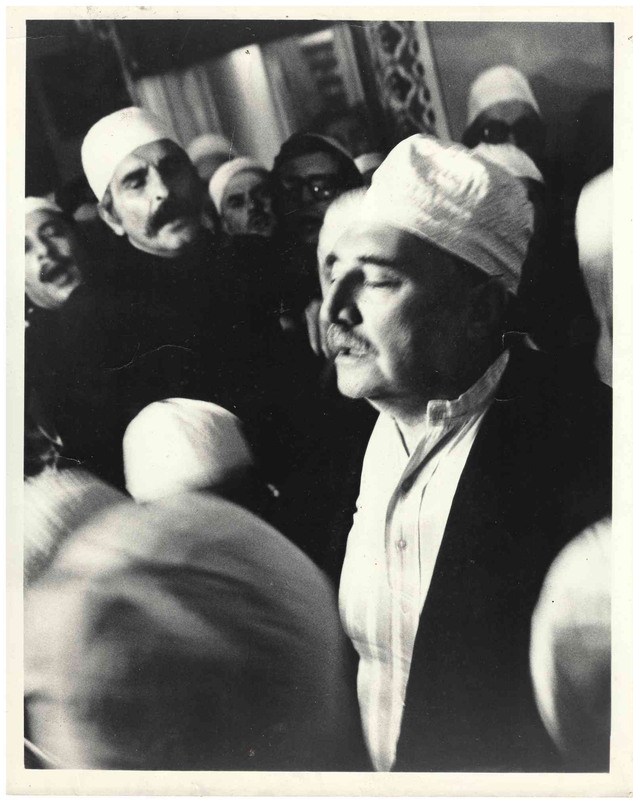
"Sufi Master Visits New York: Sheikh Muzaffer and the Halveti-Jerrahi Dervishes of Istanbul will perform the Sufi ceremony of dhikr at Cooper Union on March 23, 8:00pm and at the Cathedral of St. John the Divine on March 29, and April 3, 7:30pm", circa 1970s. Lex Hixon papers, RG 345, Box 9, Folder 2. Divinity Library Special Collections
While hosting In the Spirit, Hixon interviewed two teachers that would become deeply influential in his life: Bawa Muhaiyaddeen, a Sufi mystic from Sri Lanka, and Sheikh Muzaffer Ozak Aski al-Jerrahi, the 19th Grand Sheikh of the Halveti-Jerrahi Order of Dervishes, based in Istanbul, Turkey. Bawa Muhaiyaddeen and Sheikh Ozak appeared on In the Spirit many times.
When Hixon first interviewed Sheikh Ozak on the radio in 1978 they began the radio interview with a call to prayer. In an essay titled “the Dream” published in American Jihad: Islam in America after Malcom X, edited by Steven Barboza, Hixon recounted this first meeting:
“I didn’t have a chance to meet Sheikh Muzaffer before interviewing him…As this call to prayer was going, I looked at the sheikh. There were tears coming out of his eyes! I thought what spiritual authenticity…Later I found out that wasn’t the right interpretation, that actually he was shedding tears because he recognized me as his califa, as his successor, his representative. Every sheikh has several.”
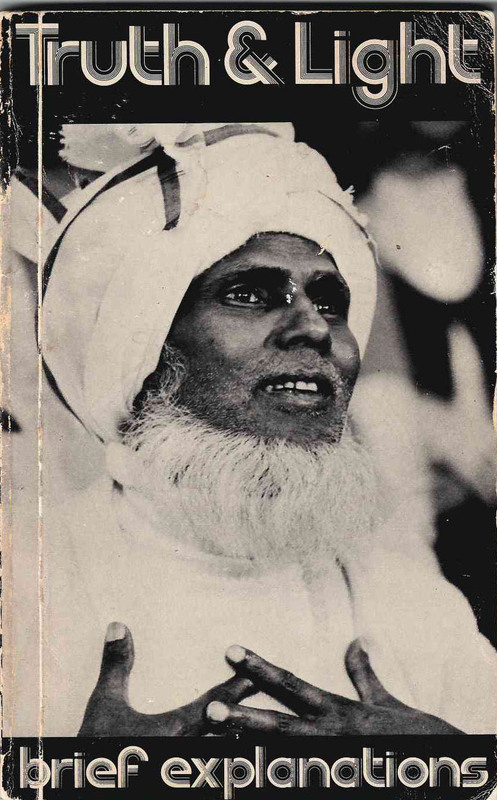
Truth and Light: Brief Explanations by his Holiness M.R. Guru Bawa, containing interviews of Guru Bawa on WBAI by Lex Hixon and KQED by Will Noffke, 1974. Lex Hixon papers, RG 345, Box 9, Folder 13. Divinity Library Special Collections
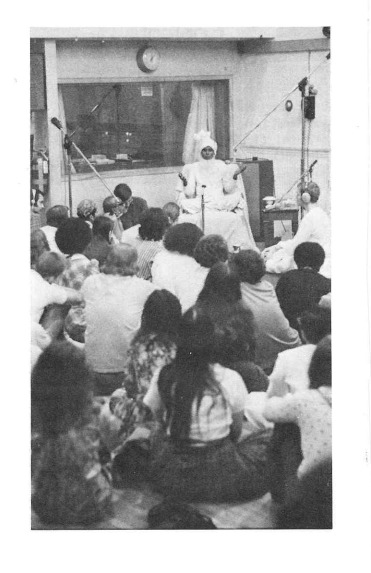
An undated photograph of Bawa Muhaiyaddeen in the WBAI studio. Hixon is seated to his right. Lex Hixon papers, RG 345, Box 1, Folder 7. Divinity Library Special Collections
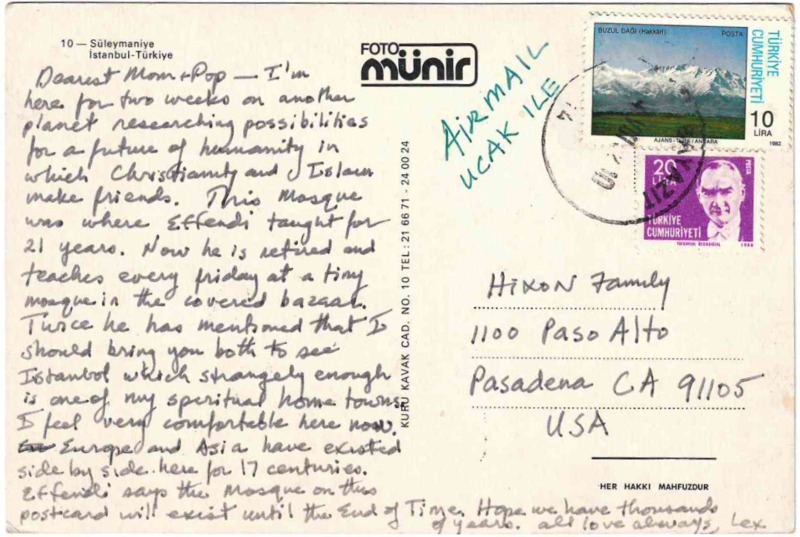
Postcard from Hixon to his parents, Adelaide and Alexander (Alec) Hixon Sr, 1978. This was sent while Hixon was in Istanbul for Ramadan, the holy month of Islam. Lex Hixon papers, RG 345, Box 8, Folder 12. Divinity Library Special Collections
In 1978, Sheikh Ozak invited Hixon to spend Ramadan in Turkey, during which Ozak was inspired to make Hixon a sheikh in the Halveti-Jerrahi Order. Overwhelmed, Hixon returned to America before the end of the holy month. In the same essay he wrote, “I was frightened by the prospect [of becoming a sheikh]. I didn’t want the responsibility. I didn’t want anything to do with being a spiritual guide.”
When Sheikh Ozak and Hixon reunited the next fall, the Sheikh said nothing about Hixon’s disappearance during Ramadan. The Sheikh traveled to the United States 14 times and established the Masjid Al-Farah mosque in New York City. To the Sufi community, Hixon was known as Sheikh Nur Al-Jerrahi. As Sheikh Nur, he oversaw the mosque and took over its duties formally when Sheikh Ozak died in 1985. Hixon was responsible for leading prayers, learning Qur’anic verses in Arabic and leading dhikr, a form of worship involving repetition of prayer for the purpose of glorifying Allah.
Hixon’s first book on Islam, The Heart of the Qur’an, was published in 1988 and is Hixon’s meditation on the Qur’an as well as reflections on his experiences with Islam and friendship with Shiekh Ozak.
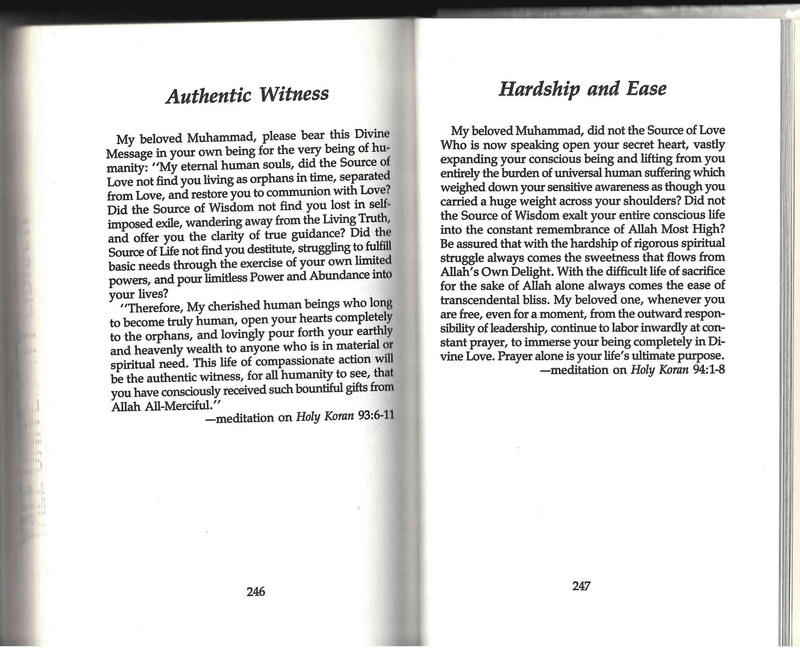
A page from Hixon's book, the Heart of the Koran, published in 1988. Yale University Library, https://search.library.yale.edu/catalog/9936376983408651.
The Hajj
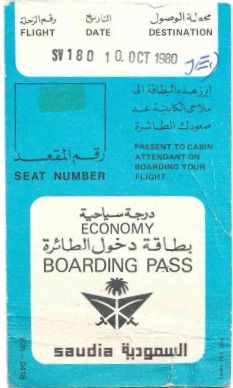
A boarding pass from Hixon's pilgrimage to Mecca and Medina, Saudi Arabia, 1980. Lex Hixon papers, RG 345, Box 9, Folder 5. Divinity Library Special Collections
In 1980, Hixon completed the Hajj with Sheikh Ozak, a religious pilgrimage to the holy cities of Mecca and Medina in Saudi Arabia. Every able Muslim is required to complete Hajj once in their life. During an episode of In the Spirit, reflecting on this experience Hixon remarked:
“It, the Hajj, really is a kind of death…when you come out the other side, it is a rebirth. And when you go back to your country or nation or your family, or wherever you left, you come back with a tremendous sense of being born fresh, of being a great deal more careful and dedicated to one’s human life and toward all that live. I have a feeling that for most Hajjis, it is something that stays with them for a lifetime. It can be called upon.”
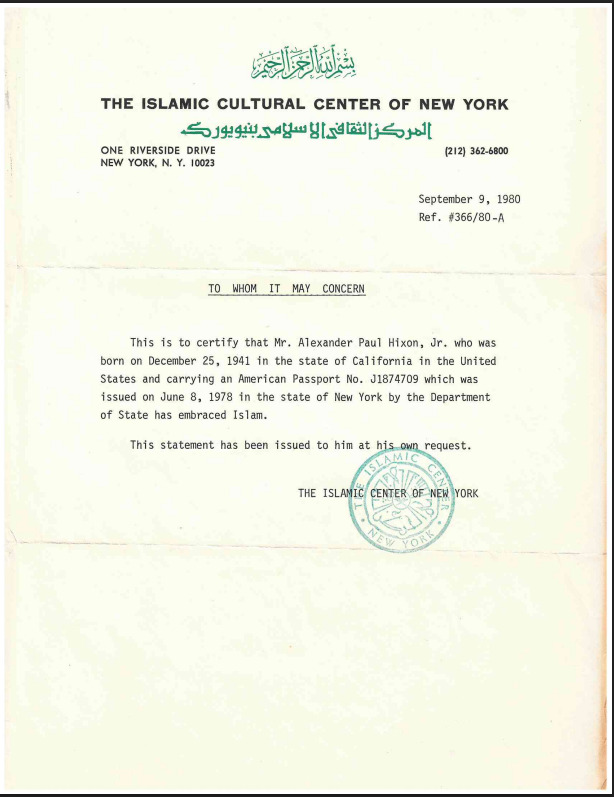
Letter from the Islamic Cultural Center, confirming Hixon's devotion to the religion of Islam, 1980. Lex Hixon papers, Rg 345, Box 9, Folder 5. Divinity Library Special Collections
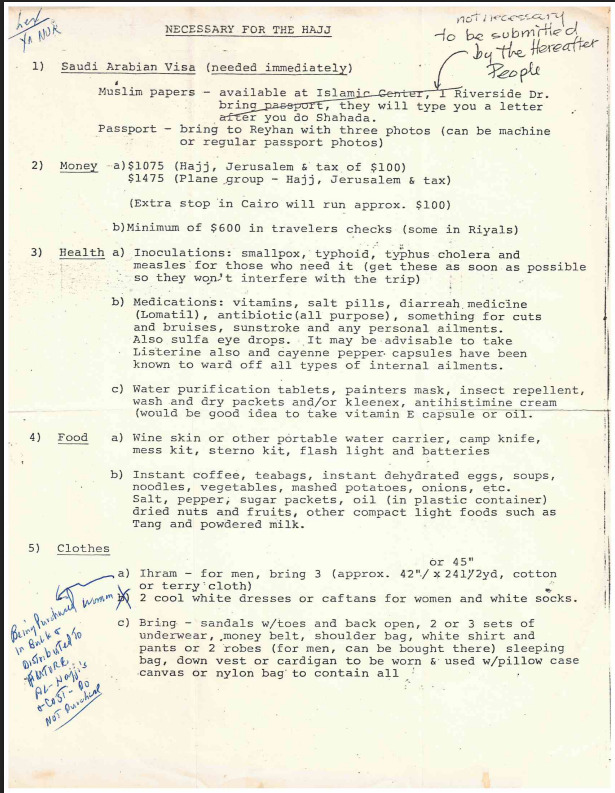
Packing list for the Hajj, 1980. Lex Hixon papers, RG 345, Box 9, Folder 5. Divinity Library Special Collections
Dream Interpretation
As part of his duties as sheikh, Hixon was responsible for interpreting the dreams of his dervishes. In the Sufi tradition, there are true dreams and false dreams. False dreams do not contain spiritual value, and the role of the sheikh is to discern true dreams and false dreams. In American Jihad: Islam After Malcom X, Hixon reflects on the importance of dreams as practice in the Sufi community:
“Very good dervishes keep a dream book. If I have an important dream I send it to the grand sheikh in Istanbul. I write it out and translate it and sent it to him. He has hundreds of dervishes with hundreds of dreams. My feeling is that these dreams don’t belong to the induvial dervishes. They belong to the whole mystical community, and by extension they belong to all humanity. If anyone can benefit from these dreams, then they’re welcome.”
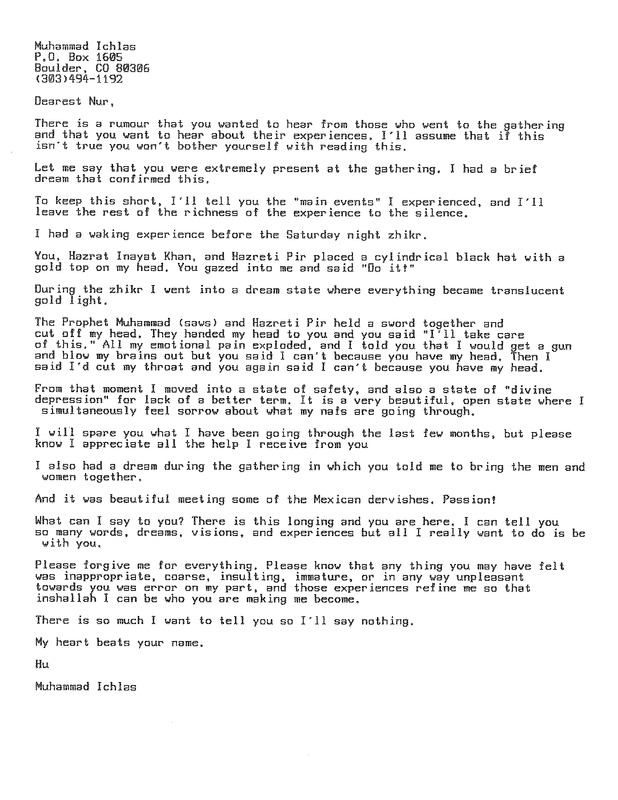
A dream sent by a dervish to Hixon for interpretation, circa 1990s. Lex Hixon papers, RG 345, Box 20, Folder 3. Divinity Library Special Collections
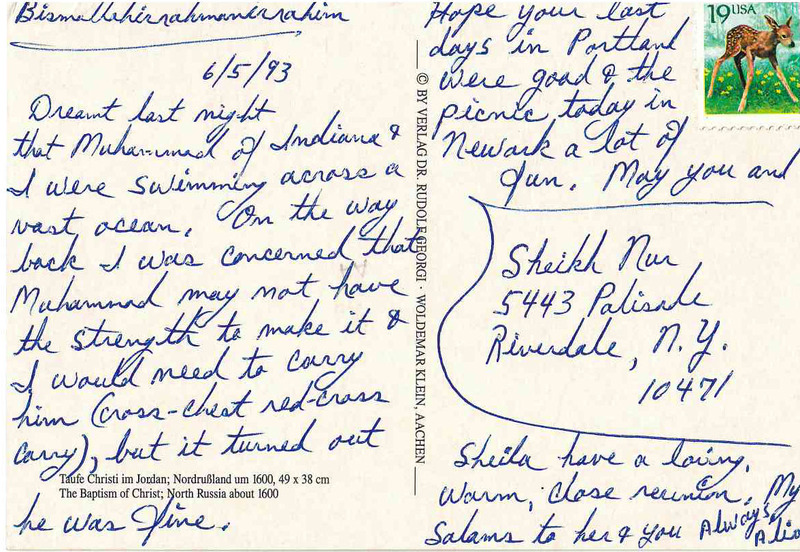
A dream sent by a dervish to Hixon for interpretation, 1993. Lex Hixon papers, RG345, Box 20, Folder 3. Divinity Library Special Collections
After Sheikh Nur's death in 1995, Shaykha Fariha Fatima al-Jerrahi, another of Sheikh Muzaffer's califas, took over the day to day of the Nur Ashki Jerrahi Order.
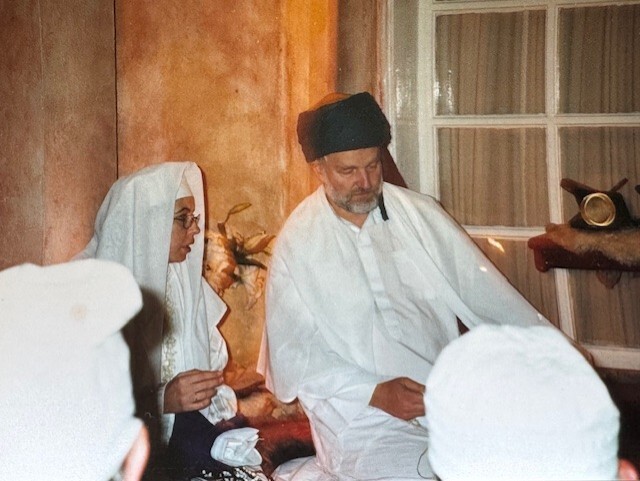
Sheikh Nur (Lex Hixon) with Shaykha Amina. Courtesy of Sheila Hixon.
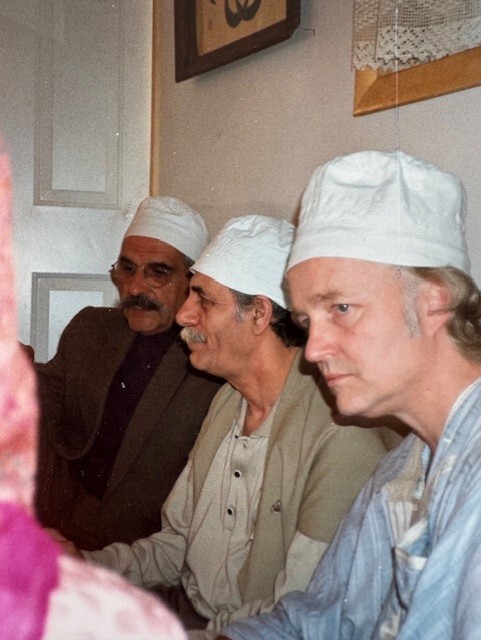
Lex Hixon with Sefer Dal, the Grand Sheikh of the Halveti-Jerrahi Order of Dervishes, center, circa 1980s. Courtesy of Sheila Hixon.