Street Life: The “Cries” in British Visual Culture, 1711-1877
Cries for the Children
Most of the prints and books in this exhibition were intended for affluent adults, but versions of the Cries were also produced for working-class readers and for children. Literacy increased in Britain during the eighteenth and nineteenth centuries, in part due to industrious itinerant vendors, known as “chapmen,” who sold inexpensive books to customers in areas where there were no bookshops. Chapbooks were small unbound books made from one or two printer’s sheets of paper, without separately printed covers, that were sold for a penny or two.
As interest in childhood education grew in the mid-eighteenth century, books specifically targeted to children appeared on the market. These were variously didactic, entertaining, and moralizing. One trailblazer was A Little Pretty Pocket Book, published in 1744 by the London bookseller and publisher Francis Newbery and sold for sixpence. Newbery built a successful list of children’s books, including The Cries of London, as They Are Daily Exhibited on the Streets, which he first published in 1775. The bestselling book was reprinted frequently. The copy exhibited here was issued in 1775; the sheet is uncut, revealing that eight pages were printed on each side. After Newbery’s death, his widow Elizabeth inherited the business, publishing more than 500 children’s books. John Harris, who took over the business in 1802 upon her retirement, reissued the book in 1835, with an altered title and a hand-colored frontispiece depicting his elegant shop in St Paul’s Cathedral churchyard. A well-dressed woman and her child clutch their purchases and speak with a man selling pies. Harris’s book was priced at one shilling and sixpence.
The professional categories of bookseller, publisher, and printer were not clearly differentiated during this period. William Darton Jnr was apprenticed to his bookseller and printer father and subsequently established his own shop on Holborn Hill, where he sold his children’s books, educational aids, games, and ephemera. His London Melodies, or, Cries of the Season cost one shilling.
Books in the Cries genre were also published in cities other than London. These include Lockhart Scott’s Cries of Edinburgh, which situates the vendors in specific locations, as did William Marshall Craig’s Description of the Plates, Representing the Itinerant Traders of London in Their Ordinary Costume. The enterprising York printer James Kendrew set up his business around 1820. He produced books priced at one penny that were aimed at customers with small budgets. His list included Sam Syntax’s Description of the Cries of London and The Cries of York, the latter of which depicts vendors in sites around that city. Even Kendrew’s modest volumes likely would have been out of reach for most of the vendors that they represented, however.
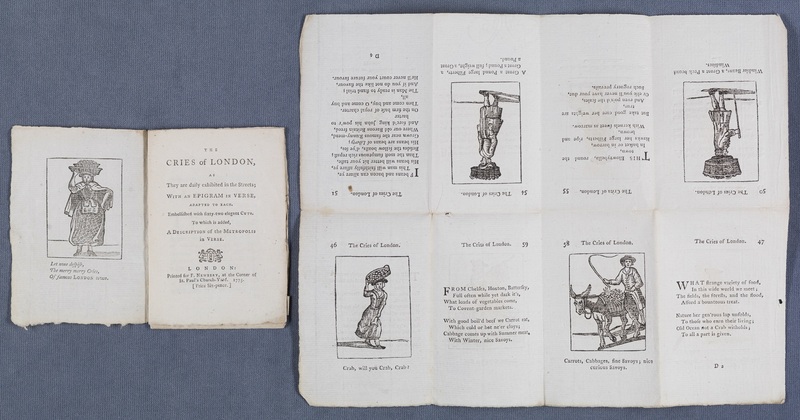
Francis Newbery (baptized 1739, died 1780)
The Cries of London, as They Are Daily Exhibited in the Streets, 1775
Original folded unbound sheets with 38 woodcuts (of 61; incomplete)
London: Francis Newbery
The Lewis Walpole Library, 646 775 N534
Shown: Title page
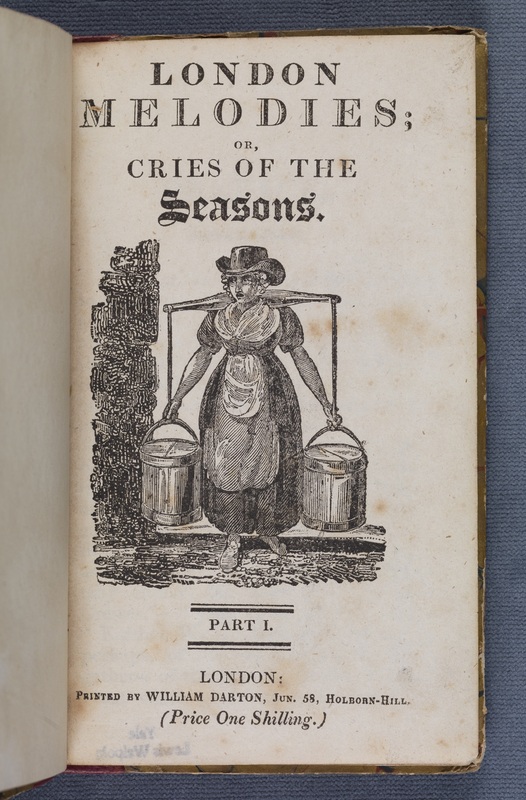
William Darton Jnr (1781–1854)
London Melodies, or, Cries of the Seasons Part I [–II], c. 1812
Book with 44 woodcuts
London: William Darton Jnr
The Lewis Walpole Library, 646 812 L846
Shown: Title page
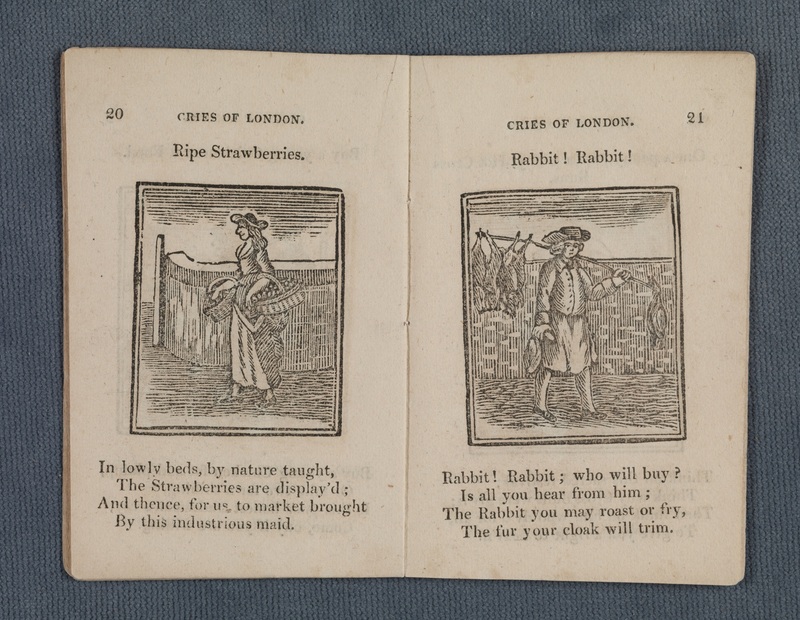
James Kendrew (died 1841)
The Cries of London: For the Instruction and Amusement of Good Children, c. 1820–1840
Chapbook with 26 woodcuts
York: J. Kendrew
The Lewis Walpole Library, 646 820 C928
Shown: Ripe Strawberries and Rabbit! Rabbit!
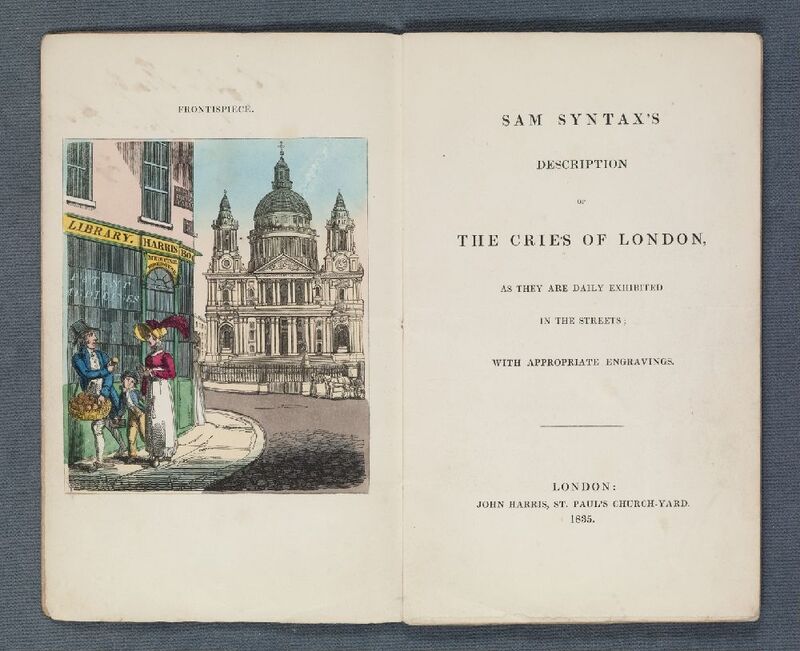
John Harris (1756–1846)
Sam Syntax’s Description of the Cries of London: As They Are Daily Exhibited in the Streets, 1835
Chapbook with 17 engravings with watercolor and letterpress
London: John Harris
The Lewis Walpole Library, 646 835 Sy992
Shown: Frontispiece and title page
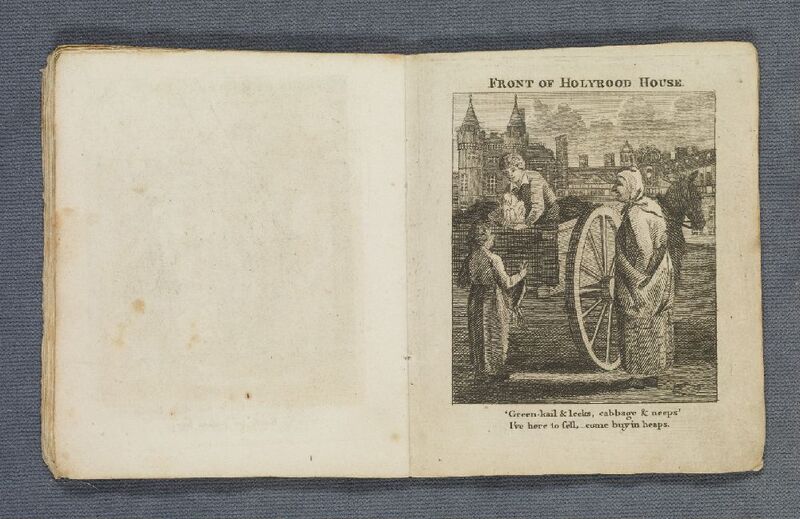
Lockhart Scott (active 1803)
Cries of Edinburgh Characteristically Represented: Accompanied with Views of Several Principal Buildings of the City, 1803
Chapbook with 21 engravings
The Lewis Walpole Library, 647 803C
Shown: Front of Holyrood House: Green-kail & leeks, cabbage & neeps
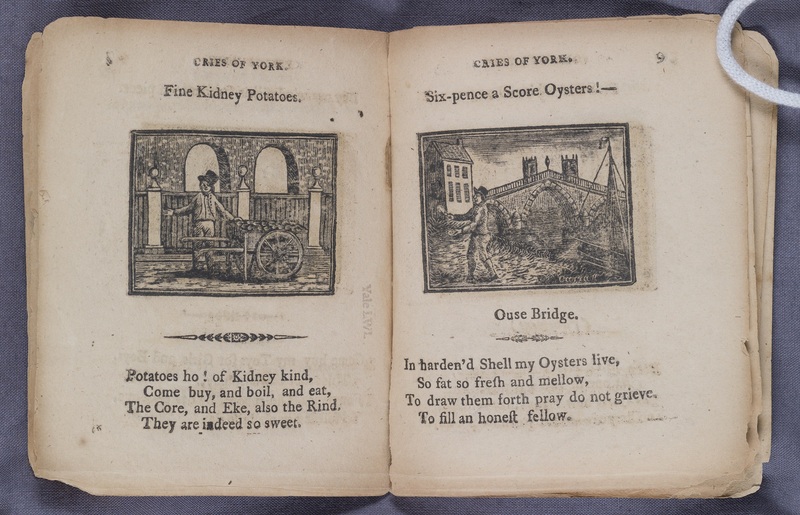
James Kendrew (died 1841)
The Cries of York: For the Amusement of Young Children. Part 1, c. 1820–1840
Chapbook with 13 woodcuts
York: J. Kendrew
The Lewis Walpole Library, 647 826 C928
Shown: Fine Kidney Potatoes and Sixpence a Score Oysters!