Caricatures, Campagna, and Connoisseurs: Thomas Patch and the British Grand Tour in Eighteenth-Century Italy
Publications on Early Italian Art
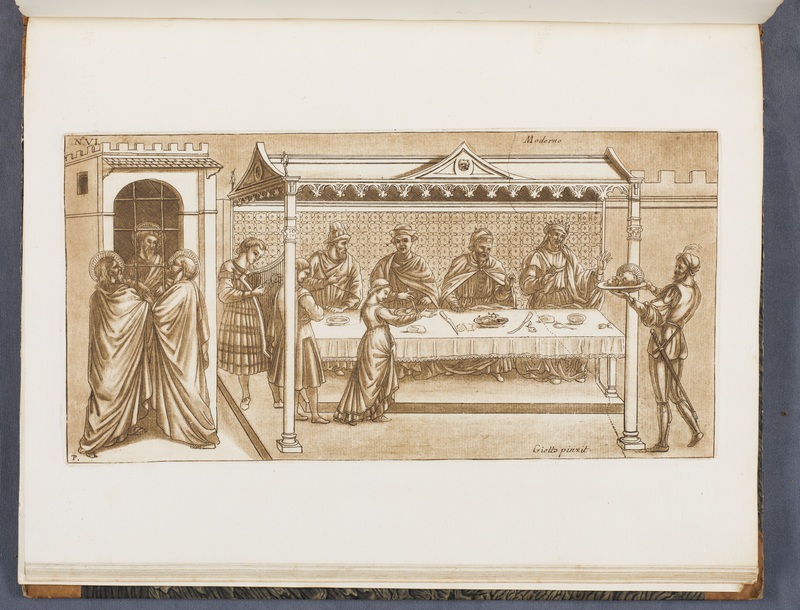
Prompted by a new edition of Vasari’s Lives of the Artists, Patch was amongst the earliest Anglo-Florentines to study and document early Florentine art. When fire in Sta Maria del Carmine damaged the chapel decorated with frescoes, then attributed to Giotto, illustrating the life of St John the Baptist in the Manetti Chapel, Patch, no doubt facilitated by Sir Horace Mann’s connections with the owners of the chapel, engraved the frescoes and salvaged a number of fragments. The paintings are now attributed to Aretino Spinelli. Patch went on to make similar folios of prints after works by Masaccio, Lorenzo Ghiberti, and Fra Bartolommeo.
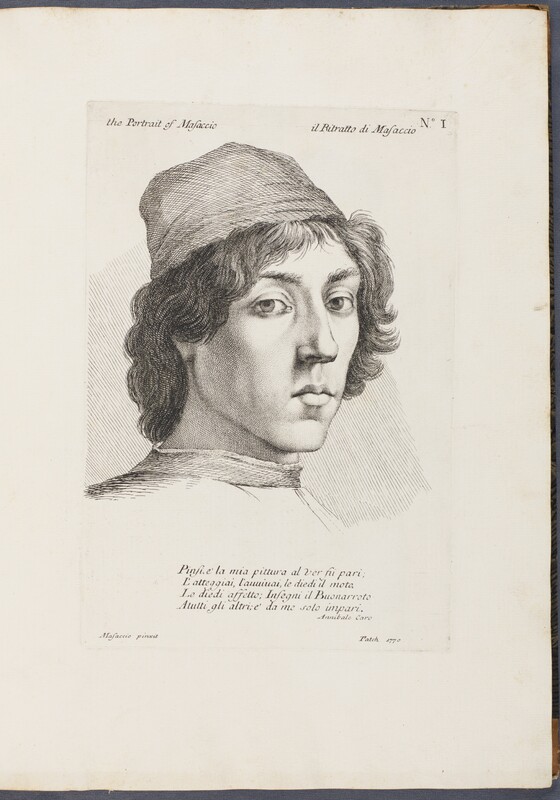
Thomas Patch
The Portrait of Masaccio
No.1 from Life of the Celebrated Painter Masaccio
Etching
Published 1770
Folio 75 P27 770 (bound with other titles)
Lewis Walpole Library
The book is open at one of Patch’s etchings after Masaccio’s frescoes in Sta Maria del Carmine. It is assumed that the heads were traced from the walls of the chapel.
Thomas Patch
Salome Dancing before Herod
From Pictures of Giotto in the Church of the Carmelites
Published 1772
L210.128 (Folio A)
Yale Center for British Art, Paul Mellon Collection
In 1348 Vanni Manetti del Buono commissioned the decoration of a chapel in Sta Maria del Carmine with frescoes illustrating the life of St John the Baptist. The chapel was already dedicated to him—Manetti’s name saint. The eighteenth-century attribution to Giotto has been discredited, and the fresco cycle is now accepted as a work by the Arezzo painter Aretino Spinelli. By 1763 the frescoes were in bad condition and on January 28, 1771, fire destroyed the chapel. Patch’s engravings and some fragments he salvaged are the only record of Spinelli’s work.
This engraving shows Salome dancing before King Herod. The fresco of Salome’s head is now in the Walker Art Gallery in Liverpool.
Thomas Patch
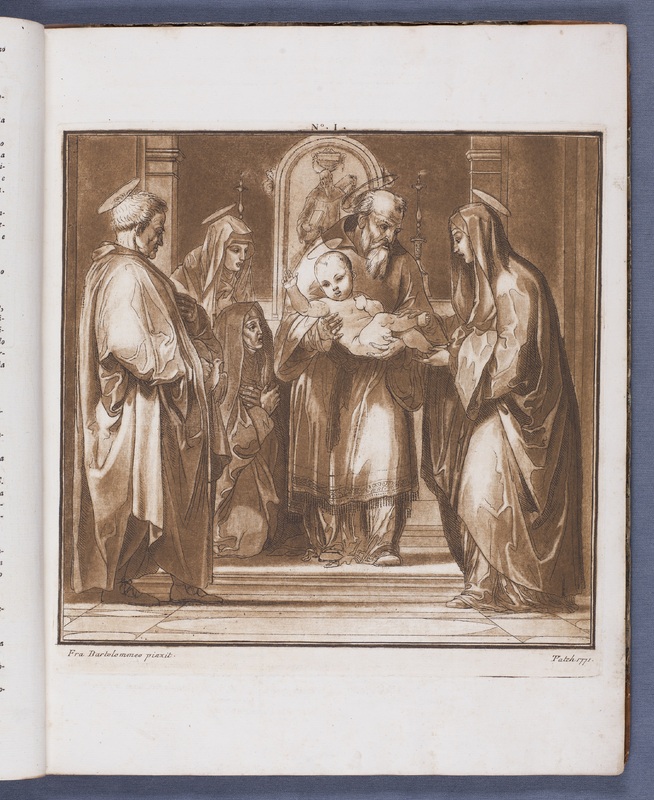
The Presentation of Our Saviour to the Temple
No. 1 from The Life of Fra' Bartolommeo della Porta
Engraving
Published 1772
Private Collection
The majority of these engravings are taken from Fra Bartolommeo’s painting of the Presentation to the Temple, dated 1516 and now in Vienna’s Kunsthistorisches Museum. In 1781 the panel was acquired by the Grand Duke Leopoldo (1747–1792), and after his death it was transferred to his elder brother’s collection in Vienna. Other plates reproduce works in the Musei di San Marco along with a Madonna and Child that is now lost.
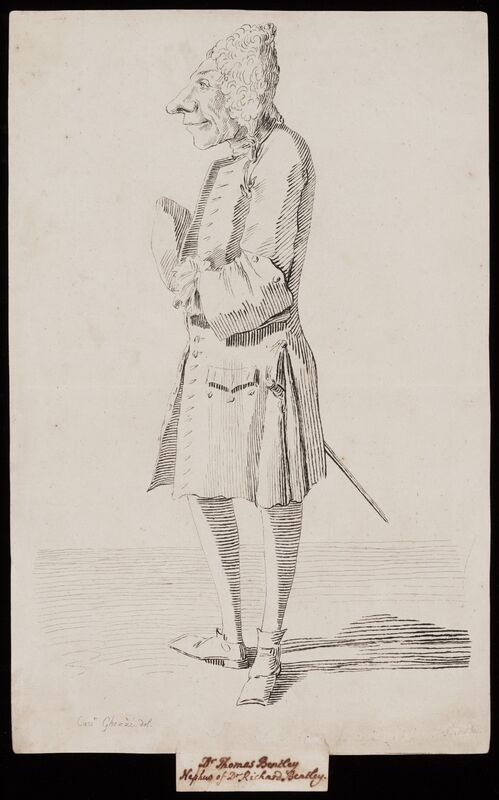
Arthur Pond (1701-1758), after Pier Leone Ghezzi (1675-1755)
Dr Thomas Bentley, Nephew of Dr Richard Bentley
Etching
Published 1743
743.00.00.50+
Lewis Walpole Library
Thomas Bentley was a scholar of ancient Greek who studied manuscripts in Florence and Rome in 1725 and 1726 with the intention of publishing them. An inscription attests to the fact that this engraving by Arthur Pond, after a drawing by Ghezzi, was owned by Horace Walpole. The profile and the hatched shading in Ghezzi’s work closely resemble the style of Patch’s caricature figures.
Thomas Patch
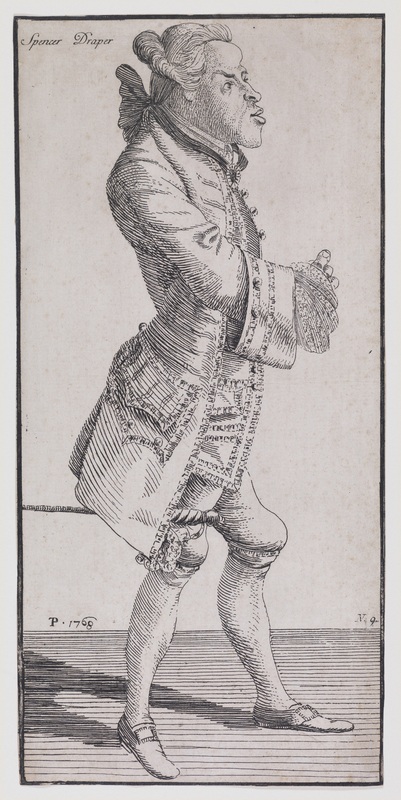
Spencer Draper
Engraving
Published 1768
Private Collection
It is known that Spencer Draper arrived in Florence on March 2, 1767, though other biographical details are unrecorded. Patch’s engraving shows a smartly dressed gentleman wearing a sword, an ailes de pigeon wig, with a solitaire, and matching waistcoat and coat.
Thomas Patch
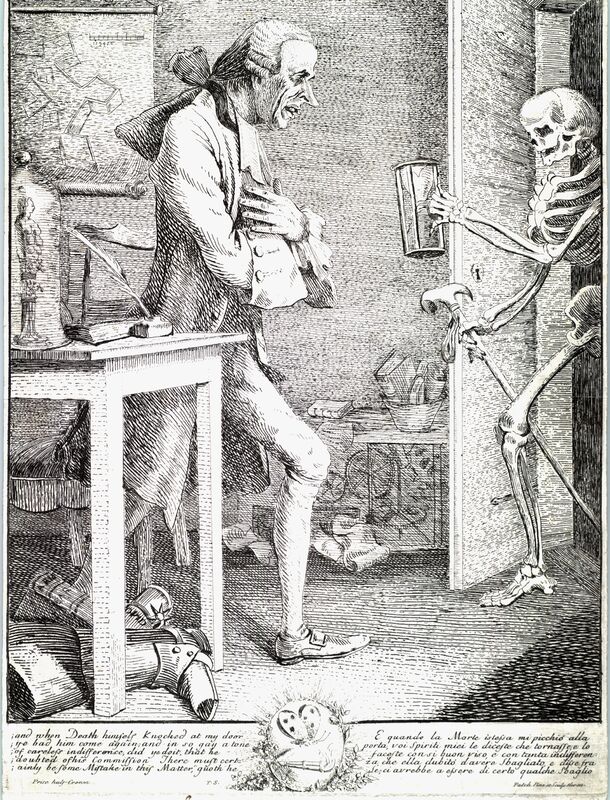
Sterne and Death
Etching
Published 1768
768.00.00.04+
Lewis Walpole Library
Revd Laurence Sterne published his very successful novel Tristram Shandy between 1759 and 1767. He traveled to Italy hoping that a warmer climate would arrest his tuberculosis, and he was painted by Patch during his six-day visit to Florence in December 1765. The canvas is now in Jesus College, Cambridge, and the image was reproduced in reverse and elaborated in this engraving. This particular sheet was sent by Sir Horace Mann to his friend Horace Walpole, who inscribed it. Three years later Patch made a second engraving without the background details except death’s hand holding an hourglass. This later print was incorporated as number 20 in his set of Twenty-five Caricatures. The only engraving of comparable complexity was of a famous quack oculist, John Taylor, who was in Florence in December 1769.